교과과정
KAIST 메타버스대학원
이수학점 구분
추천과목
Meta-Convergence (융합)

Meta-XR
교과목 상세
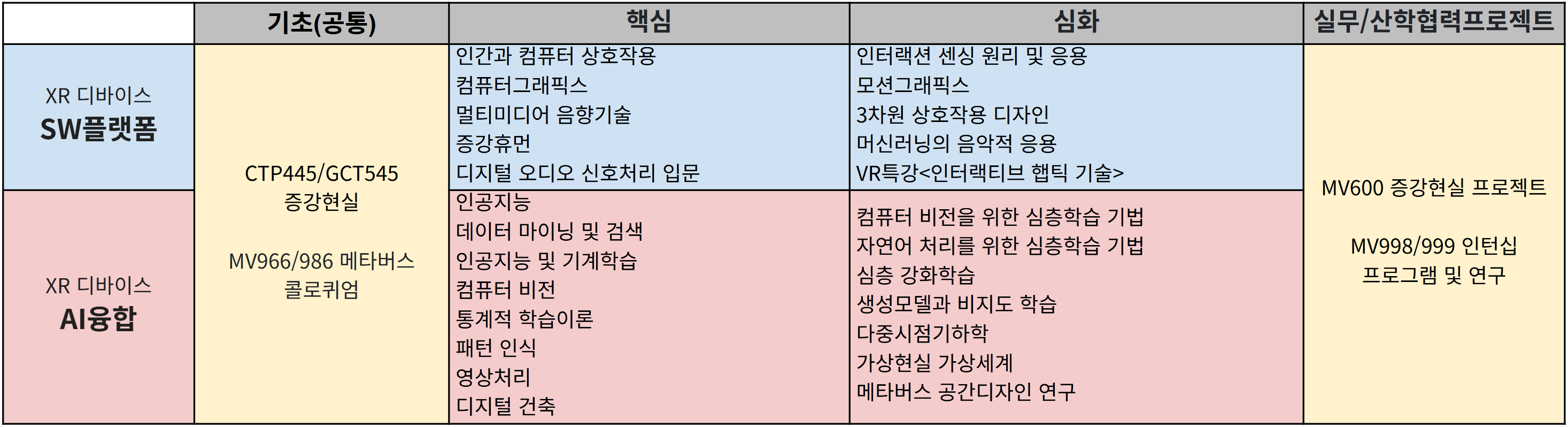
필수 증강현실 프로젝트
증강현실 관련 프로젝트를 실제로 기획하고 디자인하는 프로젝트 과목으로 다양한 증강현실 미디어의 특성을 파악하고 여러 관련 분야의 대한 이해를 바탕 새로운 아이디어를 제시한다. 실제의 증강현실 관련 프로젝트 진행을 통해 이러한 프로젝트의 진행에 대한 실제의 경험을 얻는 것에 목적을 둔다.
MV600
3
필수 메타버스 콜로퀴엄
메타버스 분야의 다양한 전문가들을 모시고 포스트 메타버스가 나아갈 방향을 모색
MV966
1
Meta융합 미시경제학
이 과목은 소비자와 기업의 최적의사결정 이론을 배우는 과목입니다. 제약조건하에서 개인과 기업의 의사결정 행태를 공부하는 과목으로서 주요 학습내용은 소비자 선택론, 기업이론, 외부효과와 사유재산권에 관한 이론과 사례입니다. 이 과목은 경영학을 전공하는 석사과정 학생을 대상으로 교과과정이 구성되어 있으며, 학생들이 미시경제이론을 논리적으로 활용하여 토론할 수 있는 능력배양에 중점을 두기 때문에 수학을 적게 사용합니다.
BTM504
3
Meta융합 혁신경영 및 전략
혁신경영전략은 혁신제품 및 서비스 구현을 위한 세부적인 과정으로 정의될 수 있으며 이는 시장, 산업의 특성을 이해하고 기술, 및 조직의 통합을 통하여 경쟁력을 확보할 수 있는 전략을 포함하고 있다. 본 과목은 역동적 기업이론을 근간으로 하여 process, path position 관점에서 혁신경영전략을 도출한다.
BTM510
3
Meta융합 회계원리
이 과목은 기업에서 회계정보가 생산, 요약 및 보고가 되는 절차와 방법론을 다루고 있다. 또한 기업의 회계숫자가 나타내는 의미를 회계정보 이용자의 관점에서 이해하고 응용하는 방법에 대해 학습한다. 내부 회계정보 이용자로서 관리과정과 회계정보의 이용방법에 대해서도 학습하게 된다.
BTM530
3
Meta융합 디지털혁신과 IT경영
본 교과목은 대학원 학생들에게 디지털 혁신과 정보기술에 관한 경영, 조직, 그리고 윤리적 논점을 제공한다. 디지털 혁신과 정보기술에 대한 효과적인 관리는 인터넷 비즈니스에 기본이 되었다. 다양한 접근 방법을 통해 본 교과목의 목적을 달성한다.
BTM537
3
Meta융합 혁신조직관리론
혁신적인 기업의 성공 조직 전략에 대해 학습
메타버스와 관한 정책 분석 및 정책 연구기법 학습을 통해 문제해결 및 정책 대안 제시 역량을 기르고 인공지능 시대에 다각화되는 여러 사업 형태에 대한 정책 및 전략 구상력, 미래 예측, 의사결정 및 조직 관리 역량 육성을 목적으로 함.
BTM538
3
Meta융합 기술경영을 위한 경영분석
이 수업은 석박사 과정 학생들에게 계량경제학과 머신러닝을 이용하여 실증분석하고 이를 해석할 수 있는 방법을 제공한다. 주요 주제는 기술 마케팅, 정보 기술, 및 기술 전략 분야를 포함한다. 수업시간에는 주로 STATA 및 파이썬를 주요 통계 도구로 사용한다.
BTM703
3
Meta융합 고급계량분석
구매 상품, 구매 시기, 구매량 결정과 관련된 소비자 행동 분석 및 상품 기획, 가격 설정, 시장 진입, 광고배분 등 기업의 다양한 마케팅 결정 프로세스를 경제학 및 경영학 계량 모델링을 통해 실증적으로 연구하는과목이다. 석,박사 과정 학생들은 다양한 형식 및 종류의 데이터를 다루는 방법을 실제 데이터를 통해 습득하고, 분석 목적에 맞는 모델링 설계 및 컴퓨터 프로그램 구현을 통해 마케팅 전략 및 함의를 도출한다. 본과목은 최신 마케팅 연구 방법론 및 동향을 학생들에게 소개함으로써 독창적인 계량 마케팅 모델링 개발을시도하게끔 디자인 되었으며, 타 학문 (전산학, 전자공학, 산업디자인)과의 융합 연구를 촉진하기 위한 모듈도 포함하고 있다.
BTM736
3
Meta융합 고급 기술혁신과 재무관리(기술혁신과 기업재무 연구)
본 과목은 재무관리의 최근 및 고전의 이론에 관하여 공부하고 이를 기술 혁신의 관점에서 응용 및 적용한다. 본 과목에서 다루는 재무관리 관련 이론의 주제는 기업지배구조, 배당 정책, 자본구성, 내부자본시장, IPO, 기업인수합병 및 분할, 기업 및 기술가치평가 등의 문헌에 관하여 공부한다. 이러한 주제들과 관련하여 연구 논문들을 공부하여 요약 발표, 논문의 비평, 및 논문의 개선 방향에 관하여 토론한다. 또한 기술 혁신이 기업의 재무 성과에 미치는 관심 주제를 정하여 선행연구조사, 연구가설 수립, 자료수집, 방법론 연구, 실증분석, 분석결과의 해석 및 결론을 도출하는 연구 논문을 작성하고 학기말 발표를 통해 연구 논문의 수정 및 보완을 하도록 한다.
BTM835
3
Meta융합 혁신조직이론논제
조직의 구조적인 부분과 행동적인 면을 분석하는 교과목으로 거시적으로는 조직의 라이프사이클, 조직 의사소통, 조직 문화, 계획된 변화를 다루고, 미시적으로는 집단역학, 경영윤리, 권력, 동기, 의사결정 등을 다룬다. 제시된 관점의 개념적 방법론적 강점 및 약점을 이해하는데 역점을 두고자 한다. 강의는 학생들이 해당분야 학술논문을 사전에 읽고 강의시간에 상호 토의하는 형태로 진행된다.
BTM838
3
Meta융합 인간과 컴퓨터 상호작용
본 과목은 다음 세 가지 목표를 추구한다. 1) 실증적 HCI 연구를 위한 과학적 기반과 연구방법을 교육하고, 2) 다양한 사용자 인터페이스 기술 및 사례를 교육하고, 3) 새로운 사용자 인터페이스 아이디어를 구현하고 평가하는 경험 체득할 수 있는 기회를 제공한다.
CS584
3
Meta융합 창의적과제
창의적인 작업을 수행하는 데 사용되는 기술을 이용한 실습위주의 공동 창작을 위한 수업
CTP404
3
Meta융합 디지털헤리티지 특강
디지털 기술과 응용, 3D 디지털 기록화, 보존 기술, 가상 박물관, VR/AR, 디지털 보존 및 윤리 문제 등 디지털 기술이 문화유산을 만나면서 도출된 다양한 주제에 대한 폭넓은 소개
CTP405
3
Meta융합 증강현실
증강현실에 대한 전반적인 이론, 기법 그리고 응용을 소개하는 과목이다. 점차 증강현실의 핵심인 컴퓨터 비젼, 영상처리 및 이해, 컴퓨터 그래픽스, 3차원 상호작용, 사용자 경험, 평가 등을 통합적으로 다룬다. 이 과목의 다양한 팀 프로젝트를 통해 학생들은 증강현실의 기본 지식과 함께 기본적인 연구 수행 방법을 익힌다.
CTP445/GCT545
3
Meta융합 문화기술론
문화콘텐츠 분야를 주 대상으로 하여 우리의 삶과 문화콘텐츠의 "디지털화"에 관련된 이론과 실제를 주로 다루는 한편, 산업적 측면에서의 실제적인 이슈도 토의
GCT501
3
Meta융합 디지털시대의미학
미학의 역사와 전통적 개념을 배경으로, 최근의 디지털 기술을 리뷰, 철학(매체미학)과 심리분석, 예술과 디지털 기술을 포함하는 학제간 시각에서 현대 문화와 예술을 새롭게 이해할 수 있는 논의의 장 마련
GCT502
3
Meta융합 인간과 컴퓨터 상호작용
인간과 컴퓨터의 상호작용을 분석, 설계, 응용하는 전 과정에 걸친 관련 지식과 적용 능력을 배양한다. 특히 문화적 맥락과 사용자 요구의 반영으로부터 시작하여 태스크의 분석, 인터페이스의 설계, 사용성 평가, 최근 연구 동향 등을 다룬다.
GCT505
3
Meta융합 컴퓨터그래픽스 이론 및 응용
CT의 전반적인 개요를 다룬다. CT는 좁게는 문화산업을 위한 디지털 기술, 넓게는 인간의 삶의 질에 관련된 디지털 기술이라고 볼 수 있다. 이 정의에 따르면, CT가 다루는 영역은 좁게는 애니메이션, 게임 등 문화콘텐츠가 있고넓게는 문화예술 전반, 사이버 인문사회학, 디지털 디자인도 포함될 것이다. 본 과목에서는 문화콘텐츠 분야를 주대상으로 하여 우리의 삶과 문화콘텐츠의 "디지털화"에 관련된 이론과 실제를 주로 다루는 한편, 산업적 측면에서의 실제적인 이슈도 토의한다.
GCT522
3
Meta융합 멀티미디어 음향기술
본 과목에서는 디지털 오디오 기술의 이론과 실제를 다룬다. 학생들은 오디오 샘플링, 스펙트럼, 음원 분석/합성, 디지털 오디오 이펙트, 심리음향학의 기초를 공부하고, 이를 바탕으로 데이터 대응에 바탕을 둔 멀티미디어 프로젝트를 구현할 수 있도록 한다.
GCT535
3
Meta융합 음악 인지과학
본 교과목은 대학원 학생들에게 음악적 요소 처리에 관한 인지적 및 정서적 과정을 심도 깊게 탐구할 기회를 제공한다. 본 강의는 음향학, 음높이 및 음색의 지각, 조성과 리듬에 대한 인지적 과정, 음악적 처리에 관련된 기억과 주의, 그리고 음악에 대한 감정적 반응 등을 중심으로 구성된다. 또한, 학생들은 이론적 지식을 바탕으로 실제 연구 질문을 해결하기 위한 소규모 프로젝트를 진행하게 된다.
GCT536
3
Meta융합 디지털 건축
디지털기술의 발전은 건축에 큰 영향을 주고 있으며 거꾸로 건축적 지식과 실제도 디지털기술, 특히 정보공간의 설계와 활용에 영향을 줄 수 있다. 본 과목은 이러한 상관관계를 이해하고 건축과 디지털기술의 접목에 대해 다룬다.
GCT554
3
Meta융합 인지와 정서
모든 문화 활동은 인간과 환경의 상호작용에서 비롯되는 정보의 표상과 표현에 의하여 결정된다. 인지과학은 인간의 제 행동이 인간의 인지구조에 의하여 설명되며, 이는 인간의 정서를 이해하는 과학적 도구가 될 수 있음을 보였다. 이 과목은 인간인지의 제 양상, 지각, 기억, 주의, 문제해결의 특성들을 살피고, 정서에 대한 이해를 추구한다. 이를 바탕으로 최근 인지와 정서의 연구에 도입된 계산모델들을 적용하여 인간 인지와 정서활동으로 생성되는 문화 활동과 그 결과물의 이해와 창출을 도모한다.
메타버스 경험 역시 현실 경험과 마찬가지로 외부 정보를 감각기관과 뇌에서 처리하는 동일한 인지 과정을 거치므로 메타버스 콘텐츠 향유와 밀접한 관련이 있음
GCT573
3
Meta융합 스토리 디자인
오늘날 스토리텔링은 소설, 연극, 영화 등 전통적인 이야기 예술뿐만 아니라 컴퓨터 게임, 웹 콘텐츠, 광고, 마케팅 등 다양한 영역에 적용되고 있다. 그러나 범람하는 이야기 중 이야기 가치(Story Value)가 높은 이야기를 찾기 힘든 것이 현실이다. 본 교과목은 이야기 가치 높은 잘 말해진 좋은 이야기(Good Story Well Told)를 만들 수 있는 이론과 기법을 소개한다.
GCT574
3
Meta융합 소셜컴퓨팅
이 수업에서는 SNS에 대한 연구들과 인간 행위에 대한 사회학적 이론들을 함께 토론한다. 사회학적 행위이론은 소셜컴퓨팅 연구자들의 데이터 해석을 풍부하게 해줄 것이다. 수강생들은 사회학적 분석틀을 설계하고 이에 기반하여 데이터 분석 결과를 해석하는 연습을 한다.
메타버스가 현실 사회의 대안인지, 재연인지에 대한 근본적 질문에 답할 수 있는 이론, 분석 방법을 이해, 습득하게 됨
GCT576
3
Meta융합 디지털시대의 뮤지엄테크놀러지
Museum을 경영하기 위해서는 소장품의 정보관리, 전시기법, 관람객과의 커뮤니케이션 등, 다방면에서의 첨단기술사용이 필수적이다. 특히 21세기 문화가 중시되는 지식산업시대의 도래와 더불어 뮤지엄의 역할과 기능이 변모하면서 사용되는 테크놀로지의 종류 및 활용범위도 비약적으로 변화하고 있다. 이 수업에서는 학생들로 하여금 21세기 뮤지엄에 대한 이해를 바탕으로 새로운 뮤지엄 테크놀로지의 양상을 분석, 연구함으로써 미래의 뮤지엄이 필요로 하는 전문적인 소양을 갖추도록 하는 것을 목적으로 한다.
GCT583
3
Meta융합 디지털 크리쳐
얼굴 애니메이션, 모션 제어, 물리 기반 모델링과 애니메이션, 감정 모델링, 그리고 지능적 행동 등 디지털 인간 기술을 중심으로 한 주요 연구 분야를 소개한다. 가상 캐릭터를 시뮬레이션 하는 데 요구되는 컴퓨팅 기술들에 촛점을 맞춘다.
GCT622
3
Meta융합 미디어 인터랙션 디자인
인간과 컴퓨터, 인간과 제품 간의 상호작용을 형성하는 다양한 미디어의 시각, 촉각, 후각적 상호작용성을 연구하여, 오감을 활용한 Tangible Interaction Design의 사례를 실제적으로 경험함으로서 다양한 인터랙션 디자인의 개발에 대한 풍부한 지식을 습득한다.
GCT651
3
Meta융합 가상현실 가상세계
본 과목은 가상현실 (VR) 기술과 그 기술을 활용하여 형성되는 가상세계를 대상으로 한다. 먼저 VR의 기술적, 미디어적 측면에서 시작하여 VR 기술을 바탕으로 한 다양한 응용을 공부하고, VR기술로 만들어진 가상세계의 사회적, 심리학적, 문화적, 기술적 특성을 다룬다. 특히 문화콘텐츠 측면에서 가상현실 기술 발전과 가상세계의 가능성을 논의할 것이다.
GCT653
3
Meta융합 컴퓨터그래픽스 특강
기하모델링, 영상생성 및 처리, 동작생성과 제어에 관한 컴퓨터 그래픽스 관련 고급 연구주제를 다룬다. 최근의 연구결과를 조사, 분석하고, 연구주제에 관련된 근본문제와 연구방향을 토론한다.
GCT721
3
Meta융합 음악기술특강 AI
음악의 산업화 및 최근의 논의 등을 주제로 하여 프로젝트를 진행한다. 주제의 설정은 제한이 없으며 포괄적이고, 음악 원형 복원, 음악과 치료, 태교, 심리치료 및 음악과 가상현실 등의 예가 있다. 이 과목을 통해 과학기술과 음악예술의 융합된 결과물을 도출한다.
GCT731
3
Meta융합 (신규개설)메타버스 디지털인문학
가상공간에서 디지털 인문 콘텐츠 생성 및 향유에 대해 학습하고 실제 디지털 인문 프로젝트를 실습
기존 디지털인문학의 이해 (학부 대학원 공통과정)을 심화시킨 과목으로서 메타버스 공간에서의 인문콘텐츠 구축에 촛점을 맞춤
GCTXXX
3
Meta융합 인간-컴퓨터 커뮤니케이션
인간과 컴퓨터의 적극적 공생과 커뮤니케이션 가능성을 탐색하고 적용 가능성을 고민
HSS.50053
3
Meta융합 메타버스 특강
메타버스 특강
MV500
3
Meta융합 메타버스와 인간심리의 이해
메타버스와 인간심리의 이해
MV551
3
Meta융합 메타버스와 AI의 법과 윤리
이 과목은 과학기술 전공 학생들이 인공지능과 메타버스의 법적, 윤리적 이슈들을 이해함으로써 첨단기술을 둘러싼 이해관계 갈등에 대한 법적 분석능력과 윤리적 감각을 배양하는 데 목적이 있다. 학생들은 다양한 사례연구를 통해 규범의 세계인 법과 윤리의 특수성을 이해하게 된다. 본 과목의 수강생은 인간의 존엄성이라는 헌법상 최고 이념을 기초로 과학기술의 개발, 사용, 산업적 이용에 있어 지속가능한 준칙을 합의절차를 통해 만들어가는 민주시민의 소양을 개발할 수 있다.
MV561
3
Meta융합 메타버스와 기술경영
메타버스와 기술경영
MV571
3
Meta융합 메타버스 공간디자인 연구
메타버스 공간디자인 연구
MV631
3
MetaXR 인공지능을 위한 기계학습
본 과목에서는 현 세대 인공지능의 핵심인 기계학습의 기초에 대하여 배운다. 기계학습의 근간이 되는 이론과 방법론을 다루며, 이후 심화학습 하게 될 과목들에 대하여 한주 분량으로 간략하게 소개한다. 구체적으로는 기계학습을 위한 수학, 기계학습의 기본 개념, 회귀, 분류 모델들의 지도학습 모델, 클러스터링, 차원감소 기법 등의 비지도 학습 모델, 앙상블 모델, 베이시언 기계학습 방법론 및 모델, 신경망, 강화학습 등에 대하여 배운다.
AI501
3
MetaXR 심층학습
본 과목에서는 주어진 기계학습 태스크를 풀기 위하여 여러 레이어의 비선형 변환을 자동으로 학습하는 딥러닝 방법론의 기초에 대하여 배우고, 이들의 컴퓨터 비전과 자연어 처리에의 몇몇 기초적인 응용에 대하여 배운다. 이 과목은 딥러닝 방법론에 대하여 이해하는 것에 초점이 맞추어져 있지만 텐서플로우 기초에 대해서 3-4시간의 실습 시간도 포함한다.
AI502
3
MetaXR 인공지능을 위한 수학
인공지능에 필요한 수학적인 개념들을 소개한다. 선형대수, 다변수 해석학, 확률론 (혹은 통계), 알고리즘, 이산수학, 정보이론 등에서 머신러닝, 딥러닝 분야에서 빈번히 쓰이는 핵심적이고 기초적인 수학 개념 및 관련 정리들을 소개하고 응용 사례를 다룬다.
AI503
3
MetaXR 인공지능을 위한 프로그래밍
인공지능 프로그래밍은 다양한 모델의 학습을 용이하게 하기 위해서 새롭게 대두된 딥러닝 및 혼합형 모델을 학습하고 추론하는 통합된 프레임워크이다. 본 과목에서는 딥러닝 모델 및 학습을 위한 프로그래밍 방법론과 딥러닝과 확률 모델을 통합적으로 프로그래밍 하는 방법론을 배운다.
AI504
3
MetaXR 인공지능을 위한 최적화
인공지능의 수많은 알고리즘은 주어진 데이터를 바탕으로 목적함수를 설정하고 해당 목적함수를 최적화하는 방법으로 학습한다. 본 과목에서는 인공지능 알고리즘들에서 많이 사용되는 최적화 방법들을 다양한 인공지능 알고리즘들을 기반으로 소개한다.
AI505
3
MetaXR 데이터 마이닝 및 검색
데이터의 종류와 양이 폭발적으로 증가함에 따라, 데이터 기반 의사결정의 중요성이 증대되고 있다. 이 과목에서는 데이터 마이닝, 검색, 탐색, 그리고 전처리와 관련된 다양한 주제를 다룬다. 특히 효율적인 알고리즘 그리고 여러 문제에 응용 가능한 도구를 소개하는 것에 초점을 맞춘다.
AI506
3
MetaXR 컴퓨터 비전을 위한 심층학습 기법
이 교과목은 컴퓨터 비전을 위한 심층학습 기법에 대한 개론을 제공하며 convolutional neural network을 이해하고 이를 영상 분류, 물체 위치 추정 및 검출 등의 시각 인식 문제에 응용하는 방법을 이해하는 데 중점을 둔다. 수강생들은 기말 프로젝트에서 자신이 선택한 컴퓨터 비전 문제를 해결하기 위하여 심층 신경망을 구현해 본다.
AI604
3
MetaXR 자연어 처리를 위한 심층학습 기법
인간의 언어를 이해하고 생성하기 위한 자연어 처리는 심층학습 기법의 발전과 함께 인공지능의 중요한 적용 분야로 대두되고 있다. 본 과목은 자연어 처리를 위한 심층학습 기법 기반의 핵심 모델과, 이러한 모델의 대표적인 적용 분야인 문서 분류, 기계 번역, 질의응답, 대화 시스템 등을 학습한다.
AI605
3
MetaXR 심층 강화학습
본 과목은 기계학습 및 인공지능의 중요분야인 강화학습을 위한 심층 학습을 주제로 한다. 심층 강화학습은 지능적인 의사결정이 필요한 모든 분야에 응용될 뿐 아니라, 일반적인 모델 학습에도 사용되는 중요 기계학습 기술이다. 대학원 수준의 배경지식을 쌓고 최신 이론/응용 연구 동향을 살펴본다.
AI611
3
MetaXR 생성모델과 비지도 학습
이 과정의 목표는 생성 모델과 비지도 학습에 대한 심층 토론을 제공하는 것임. 학생들은 확률 이론, 최적 수송 및 확률적 미분 방정식과 같은 필요한 수학적 도구뿐만 아니라 고전적 GAN에서 최신 모델에 이르는 알고리즘의 특정 구현을 배우게 됨.
AI618
3
MetaXR 3차원 데이터를 위한 기계 학습
3차원 데이터를 처리하거나 생성하는 최신 기계 학습 기술 학습.
CS479
3
MetaXR 대화형 컴퓨터그래픽스
컴퓨팅 환경의 발전으로 3D 가상 세계의 고품질 렌더링을 실시간으로 얻을 수 있게 되었다. 이 과목은 컴퓨터 애니메이션뿐만 아니라 컴퓨터 게임, 시뮬레이션, 가상현실 등 다양한 인터랙티브 애플리케이션에서 필수적인 3D 컴퓨터 그래픽과 시각화를 실현하기 위한 실용적인 알고리즘을 이해하고자 하며, 인터랙티브 컴퓨터 그래픽의 개념을 소개하는 프로젝트 위주의 수업이다.
CS482
3
MetaXR 컴퓨터비전을 위한 기계학습
이 과목은 시각 학습과 인식을 위한 개념, 이론 및 최첨단 방법을 다루며, 컴퓨터 비전, 최적화 관점에서 더 넓은 머신 러닝 세트에 중점을 둔다.
CS485
3
MetaXR 웨어러블 사용자 인터페이스
컴퓨터 형태와 활용 환경이 다양해짐에 따라 기존의 GUI를 넘어 다양한 사용자 인터페이스가 진화하고 있는데, 특히 AR/VR 플랫폼의 발전으로 웨어러블 사용자 인터페이스의 중요성이 커지고 있다. 이 과목은 다양한 장르의 웨어러블 사용자 인터페이스, 주요 프로토타이핑 기법, 그리고 새로운 웨어러블 인터페이스를 제안하기 위한 멀티모달 채널을 이해하는 것을 목표로 한다.
CS486
3
MetaXR 인공지능 기계학습
컴퓨터 비전을 위한 최신 딥러닝 방법과 연구주제
CS570
3
MetaXR 컴퓨터 비전
이 수업의 목표는 컴퓨터 비전의 이론과 응용을 제공하는 것이다. 주요 주제로는 디지털 이미지 기초, binary 비전, gray-level 비전, 3D 비전, 모션 감지 및 분석, 컴퓨터 비전 시스템 하드웨어 및 아키텍처, CAD 기반 비전, 지식 기반 비전, 신경망 기반 비전 등이 있다.
CS576
3
MetaXR 컴퓨터그래픽스
이 과목은 컴퓨터 그래픽스의 기초와 게임, 영화 및 기타 관련 분야에 대한 응용을 소개한다. 특히 컴퓨터 그래픽의 다양한 분야, 기초, 렌더링, 애니메이션, 모델링에 대해 다룬다.
CS580
3
MetaXR 모션 그래픽스
인간의 움직임을 분석하고 생성하기 위한 기초 및 중급 이론 수업. 포즈와 움직임을 표현하는 수학기법. 운동학 및 모션캡처 데이터 처리 등을 통해 기본 동작을 생성하는 기술 소개. 물리기반 애니메이션 및 동작 계획 이론 학습
메타버스 내 가상 물체/아바타의 움직임을 생성하는 수학, 기구학, 제어 이론을 다루므로, 메타버스 콘텐츠 생성 기술과 밀접한 관련이 있음.
CTP525
3
MetaXR 전기 전자공학 특강 <오디오 신호처리 입문>
이 과목은 Virtual Reality(VR), 3D 오디오, 실내 임펄스 응답(Room Impulse Responses), 기본 필터 설계(Basic Filter Design), 음원 위치 추정(Sound Source Localization) 등을 위한 다양한 오디오 신호 처리 기법을 다룬다. 음의 전파(sound propagation)와 인간 청각(human hearing)의 기본 원리를 청취 예제와 함께 설명하며, 각 주제에 대한 응용 사례 및 Matlab 기반 구현 예제를 제시한다. 단일 채널 필터링(Single channel filtering), 시간-주파수 분석(Time-frequency analysis), 다채널 신호 처리(Multichannel signal processing) 등이 주요 기법으로 활용된다. 또한 학생들이 직접 하나의 기술을 실습할 수 있는 학기말 프로젝트(term project)도 포함되어 있다. 이 과목은 신호 및 시스템(Signals and Systems)과 디지털 신호 처리(Digital Signal Processing)에서 배운 내용을 실습하고 확장할 수 있도록 구성되어 있다.
메타버스의 입체 음향 지각과 신호처리를 위한 기초를 배우는 과목
EE488
3
MetaXR 전기 전자공학 특강 <시각적 이해를 위한 심층 학습>
본 과목은 시각적 정보를 분석하기 위한 기계학습 기법들을 소개한다. 전반부에서는 최근 많이 사용되는 심층학습 기법들을 주로 다루며, 후반부에서는 이러한 방법들을 사용해서 다양한 시각적 이해 문제를 해결하는 방법을 다룬다.
EE488
3
MetaXR 통계적 학습이론
이 과목은 학생들에게 최근 머신 러닝 기술과 알고리즘들을 소개하고, 기초적인 개념과 직관력을 심어주는 것을 목적으로 한다. 강의에서 다룰 내용은 perceptron과 같은 고전적 개념에서부터 boosting, support vector machine, graphical model 등 최신 개념까지 포괄한다. 이 강의에서 소개될 대부분의 알고리즘은 통계적 추론을 기반으로 한다.
EE531
3
MetaXR 패턴인식
Bayes 결정이론, 모수형 확률 밀도 함수 추정, 비모수형 확률 밀도 함수 추정 및 인식 기법, 특징 변환 및 선정, 선형 판별 함수, Support Vector Machine, 다계층 신경회로망, 비관리형 학습법, Clustering 등 통계적 방법에 근거한 패턴 인식 기법들에 관하여 강의한다.
EE534
3
MetaXR 영상처리
여러 가지 영상신호 발생기기로부터 얻어지는 영상신호에 대한 기본적인 디지털 처리와 분석, 이해에 대해 배운다. 주제는 샘플링, 선형과 비선형 영상처리, 영상압축, 영상재구성, 영상분할 등으로 이루어져 있다.
EE535
3
MetaXR 다중 시점 기하학
삼차원 컴퓨터 비전 분야에서 필요로 하는 핵심적인 개념과 기법들을 다룬다. 주요 주제는 사영 기하, 좌표계 변환, 좌표 변환 행렬 추정, 카메라 모델, 카메라 행렬 추정, epipolar geometry, 바탕행렬, 바탕행렬 추정, 사영 복원, trifocal tensor, 3차원 구조 계산 등이다.
EE667
3
MetaXR 음성인식 시스템
본 교과목은 음성인식 알고리즘 및 시스템을 개발하는데 있어서 요구되는 이론 및 구현 기술들에 대하여 다룬다. 특히 음성신호 모델링에 자주 이용되는 HMM 기법의 이론 등 패턴인식 기법, 연속음성인식을 위한 탐색기법 등 관련된 주제들을 깊이 있게 공부한다.
EE738
3
MetaXR 3D 인터랙션 디자인
3D 인터렉션 디자인에 대한 전반적인 이론, 기법 그리고 응용을 소개하는 과목이다. 3D 인터렉션의 개요 및 역사, 가장 근간이 되는 개념, 핵심 주제 등을 다룬다. 이 과목의 다양한 팀 프로젝트를 통해 학생들은 3D 인터렉션 분야의 기본 지식과 함께 기본적인 연구 수행 방법을 익힌다.
GCT555
3
MetaXR 증강휴먼
본 과목은 증강현실에 대한 이해를 바탕으로 증강도시와 증강휴먼 연구에 대한 현황을 파악하고 미래 방향에 대한 새로운 아이디어를 제시하는 것을 목표로 함. 현황 조사, 비교 분석, 미래 전망 등 연구 기획 과정을 통해 연구 계획 수립, 제안서 작성, 수행 방법을 익히는 것을 목표로 함. 특히, 도시의 디지털트윈을 기반으로 증강현실 기술을 도시에 적용하는 방법에 대해 탐구함. 그리고, 스마트 폰이나 안경 등을 통해 모아지는 개인 데이터를 활용하여 개인 디지털 트윈과 자아를 구성하고 이를 바탕으로 사람의 능력을 1)육체적 2)지적 3)사회적으로 확장하여 증강도시를 지혜롭게 사는 도구로서 증강휴먼 플랫폼의 필요성과 가능성을 탐색하고자 함.
GCT565
3
MetaXR 머신러닝의 음악적 응용
음악 정보 검색은 음악에 관련된 다양한 정보를 알고리즘을 통해 자동으로 추출하는 것을 목표하며, 이를 통해 음악 검색, 추천, 음악 연주 및 감상, 음악 교육, 시각화 등 다양한 분야에 응용하고자 한다. 본 과목은 음악 정보 검색에서의 다양한 주제에 대하여 컴퓨터 기반의 분석을 중심으로 소개한다.
GCT634
3
MetaXR 가상현실 특강<인터랙티브 햅틱 기술>
인간과 컴퓨터, 인간과 제품간의 상호작용을 형성하는 다양한 미디어의 시각, 촉각, 후각적 상호작용성을 연구하여, 오감을 활용한 Tangible Interaction Design의 사례를 실제적으로 경험함으로서 다양한 인터랙션 디자인의 개발에 대한 풍부한 지식을 습득한다.
확장현실에 활용 가능한 인터랙티브 기술 및 관련 연구를 소개하고 제작 및 응용 방식에 대한 탐구
GCT722
3
MetaXR 인터랙션 센싱 원리 및 응용
인터랙션에서 주로 활용되는 3D 및 물리 센싱 기술의 원리를 기본적으로 교육하고자 한다. 3D 센싱의 경우 광학적 기본 원리, 2D 센싱의 경우 각 물리적 센서의 기본 구성 요소등을 교육하고자 한다. 또한 3D센싱과 물리적 센싱 요소기술을 활용하여 제공되는 부분과 이를 응용하여 인터랙션을 제공하고자 하는 부분도 교육하고자 한다.
MV623
3
(신규개설)메타버스 스토리텔링
메타버스 환경에 최적화된 스토리 디자인의 기본 원리를 이해하고, 스토리 공학적 접근 방법으로 메타버스 콘텐츠 기획 실습. 실제 스토리 디자인을 통해 스토리 개발의 절차 및 개발 과정의 난점을 이해하고, 스토리텔링의 기본 개념과 이론을 익히며, 스토리를 공학적으로 접근한 논문 작성
메타버스 환경에 최적화된 스토리디자인의 기본원리를 이해하고, 스토리공학적 접근 방법으로 메타버스 콘텐츠 기획 실습.
HSSXXX
3
메타버스지식재산경영전략
특허법, 저작권법, 상표법 등 주요 IP법의 체계정리, 메타버스 IP의 특수성, NFT와 저작권/상표권, IP 경영 및 소송사례, IP협상 시뮬레이션 등
MIPXXX
3
메타버스 콜로퀴엄
메타버스 분야의 다양한 전문가들을 모시고 포스트 메타버스가 나아갈 방향을 모색
MV986
1